Favstar was a mobile-first PWA connecting advertisers with social media influencers for structured, multi-step ad campaigns. advertisers defined targeting and terms, influencers evaluated offers, estimated earnings, and submitted proof of completion.
Built under a marketing company as a startup-style product, it reached production but was later discontinued due to expanding scope, timelines, and budget.
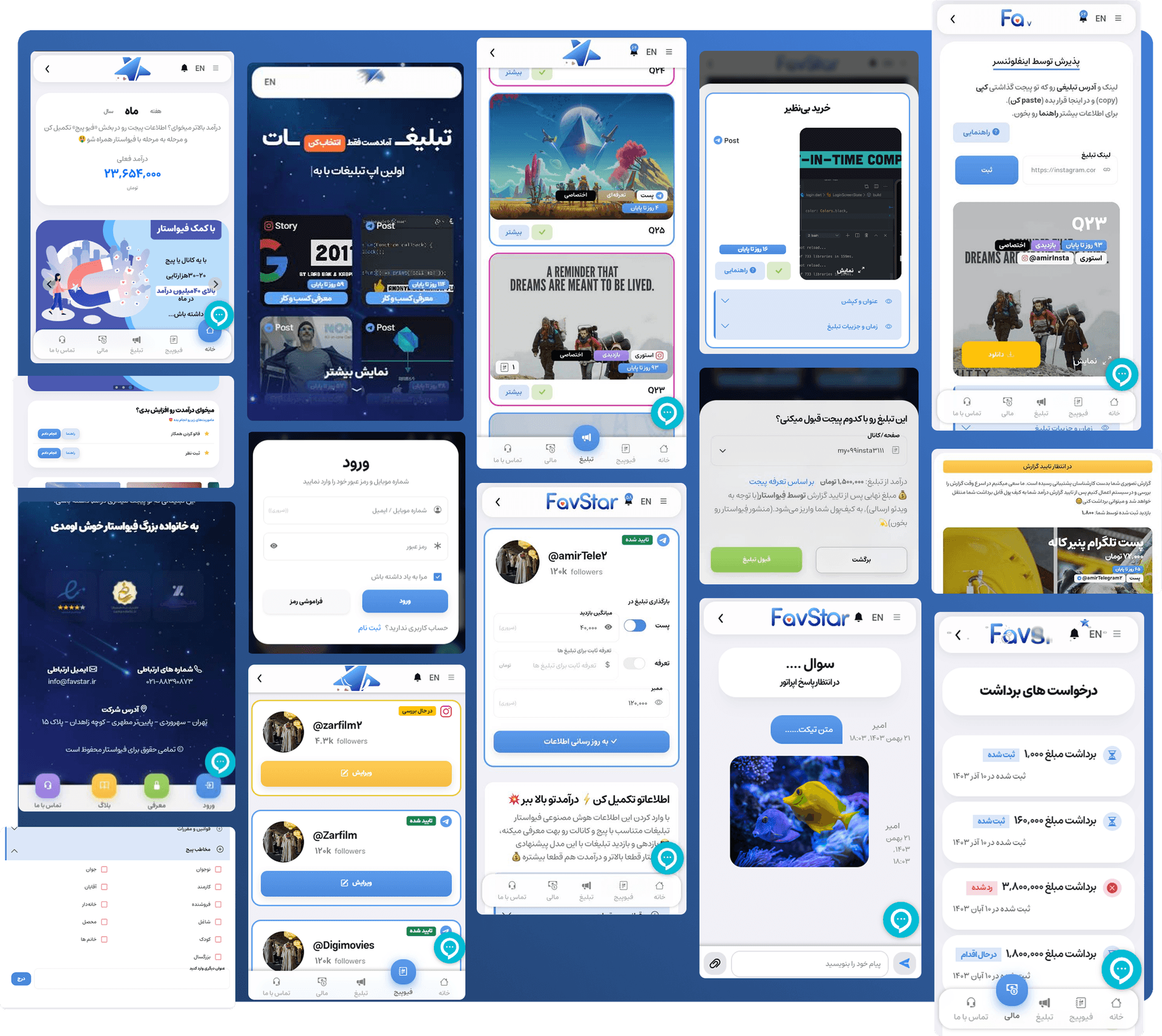
Platform Overview
Three dashboards, one Django-based system:
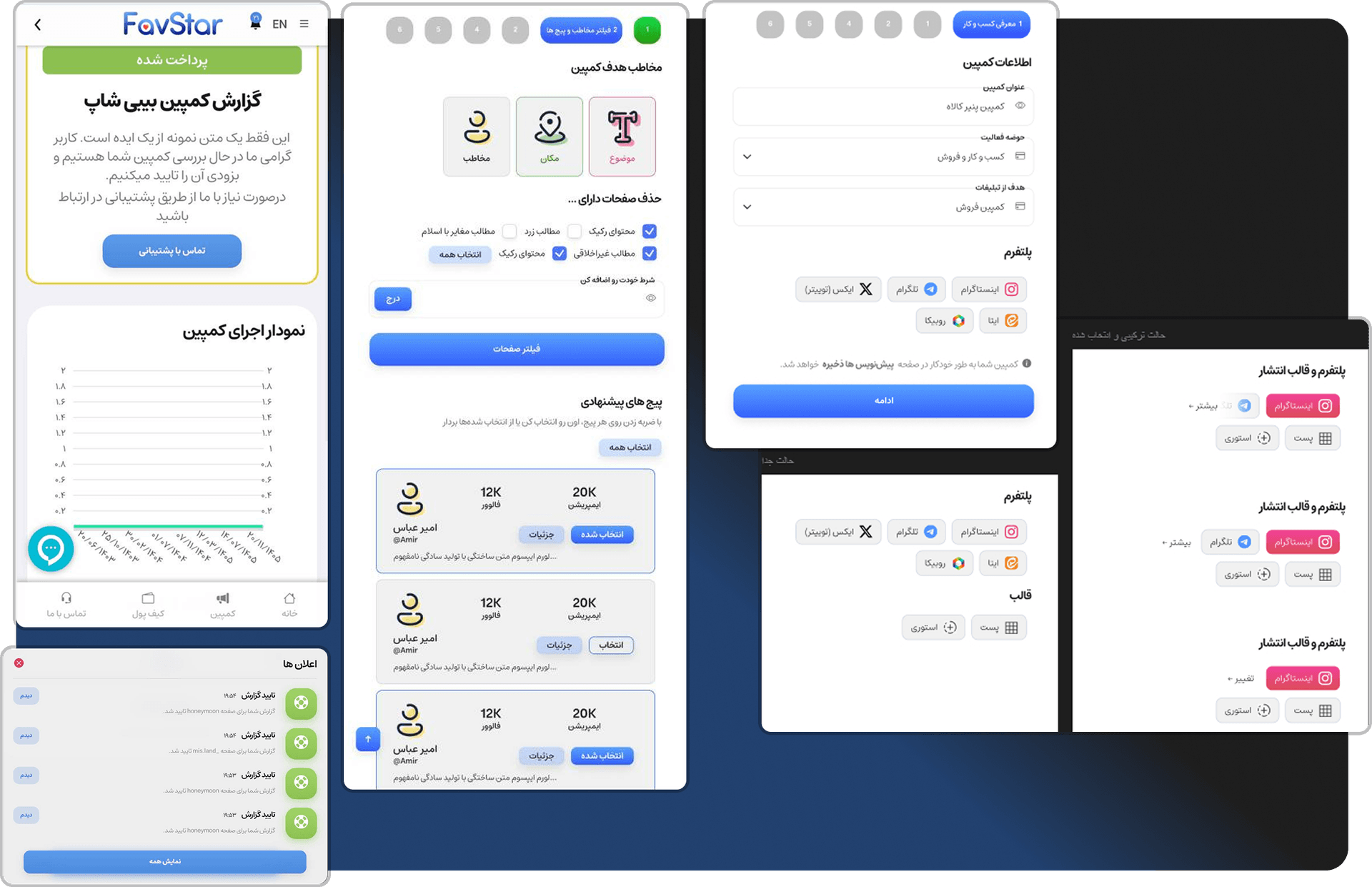
Advertiser: an 11-step campaign wizard with targeting (platform, content type, audience, location via SVG map), page-filtering rules, suggested influencer pages with pricing insights, drafts, lifecycle tracking, and reports.
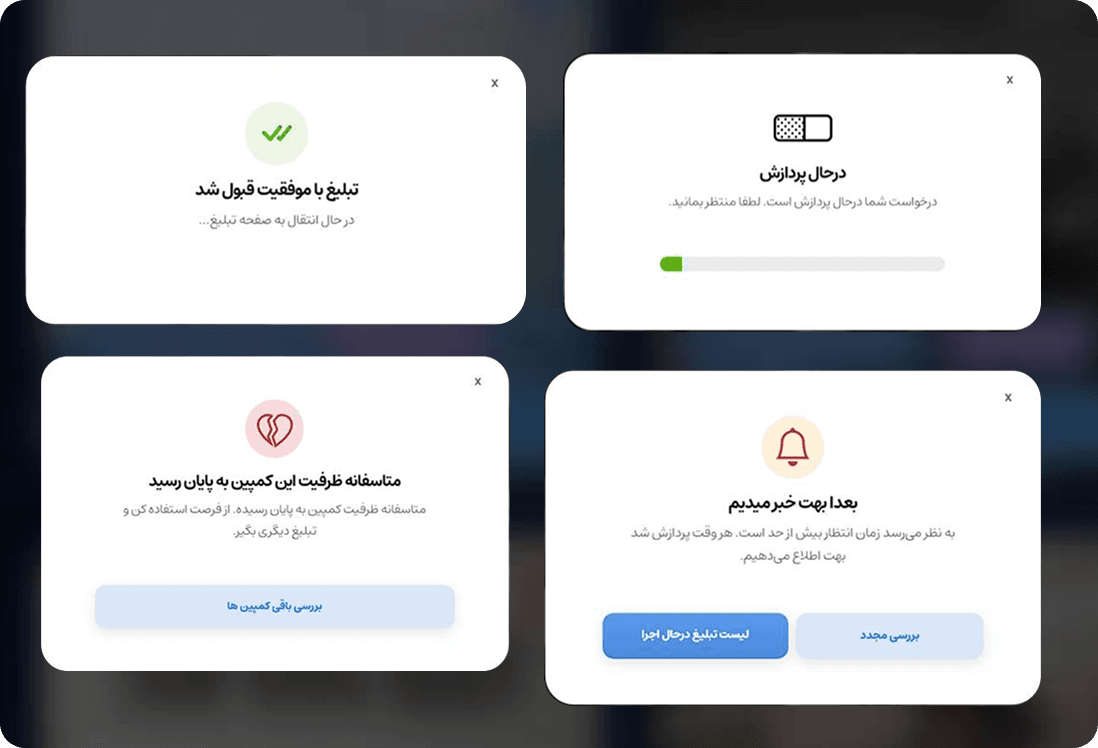
Influencer: campaign discovery and filters, page verification, fixed-rate or view-based pricing, milestones, earnings estimates, multi-page campaign acceptance, status tracking, proof submission, and wallet/reports.
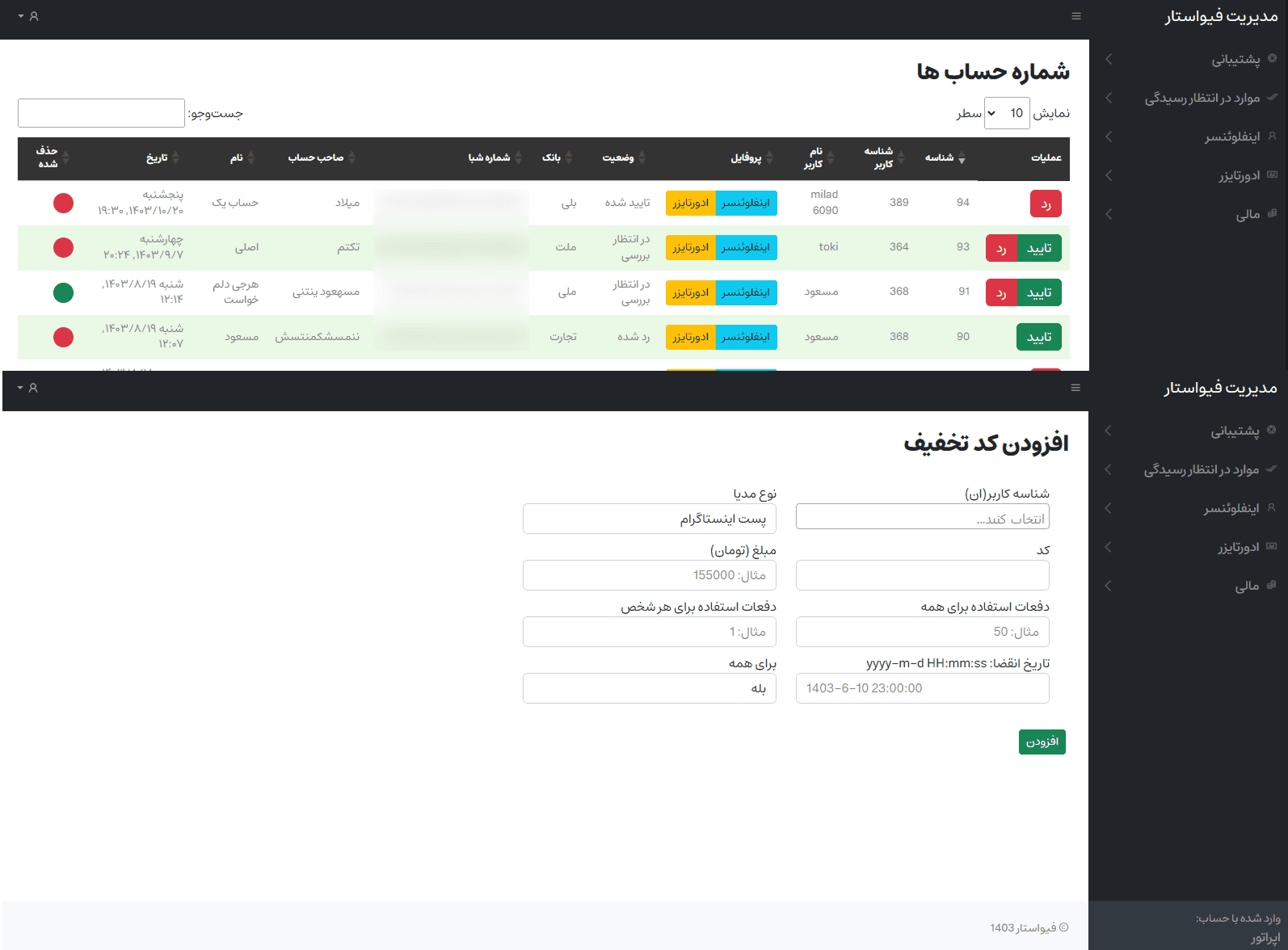
Operator: a lightweight panel with DataTables-driven tables/reports and system configuration.
Multilingual, Theming & UI
English/Persian UI with full RTL/LTR switching, plus dark/light modes (later dropped). Not technically hard, but it multiplied testing and coordination work across every feature. I also built a few Figma mockups to align with stakeholders.
My Role
I owned the entire front-end, working full-time alongside a manager, a backend dev, testers, and stakeholders. handling UI logic, Ajax integration, state, multilingual support, theming, and architecture on top of an existing template that needed heavy rework.
Architecture & Implementation
Built with jQuery, Bootstrap 5, and Ajax on Django templates, but behaved like an SPA via async calls and dynamic DOM updates. JS was split into shared base files, per-dashboard files, and per-page scripts. Constant feature expansion pushed some components (like campaign cards) into multiple variants, adding coupling; mitigated with partial refactors when time allowed.
Main Challenge
Delivering a fast-growing product under constantly changing requirements and limited capacity: maintaining three dashboards largely solo, iterating the 11-step wizard, managing shared components under pressure, and debugging Safari/Samsung Internet animation quirks. Shipping stable features often won out over deeper refactoring.
Takeaways
Favstar was a defining project. it built my confidence with complex real-world systems, ability to work under pressure and ambiguity, and appreciation for planning and architectural foresight. Rebuilding it today, I'd push for a component-based framework and clearer requirements up front. Still one of the most formative projects in shaping how I build front ends.